

Must-Have Hunting Safety Gear
Hunting is about more than skill – it’s about preparation. From personal protective equipment to survival tools, having the right safety gear provides a safer, more enjoyable hunting experience.
Safety Gear for Hunting Trips
Carrying the proper safety gear keeps you prepared for emergencies, unpredictable weather, and any challenges the outdoors might throw your way. Here’s a breakdown of safety items every hunter should pack.
Personal Protective Equipment (PPE)
PPE keeps you safe from environmental hazards and unexpected accidents while hunting.
- Hearing and eye protection: Gunfire can damage hearing, and stray debris can injure your eyes. Quality earplugs or muffs and ballistic eyewear are non-negotiable for hunter safety. For an added layer of comfort to your ear muffs, add a Flatline Fiber Ear Pro Wrap.
- Weather-appropriate clothing: Dressing in layers is key to staying comfortable and protected. Start with moisture-wicking base layers to keep dry, add insulating mid-layers for warmth, and finish with a waterproof outer layer to shield against rain or snow. Don’t forget gloves, a hat, and sturdy boots.
Navigation and Communication Tools
Staying aware of your location and maintaining communication is vital for your safety in the wilderness.
- GPS devices, maps, and compasses: Technology like GPS devices provide precise navigation, but always carry a backup map and compass in case batteries run out.
- Two-way radios or satellite messengers: Two-way radios keep you connected with your group, while satellite messengers let you call for help in emergencies.
First Aid and Trauma Kits
Accidents happen when you least expect them, so being prepared with a reliable first aid kit is essential.
- Tourniquets: These are used to control severe bleeding. Consider using a Tourniquet Holder so this life-saving tool is easily accessible when seconds count.
- Emergency blankets: Compact and lightweight, these are vital for retaining body heat and preventing hypothermia.
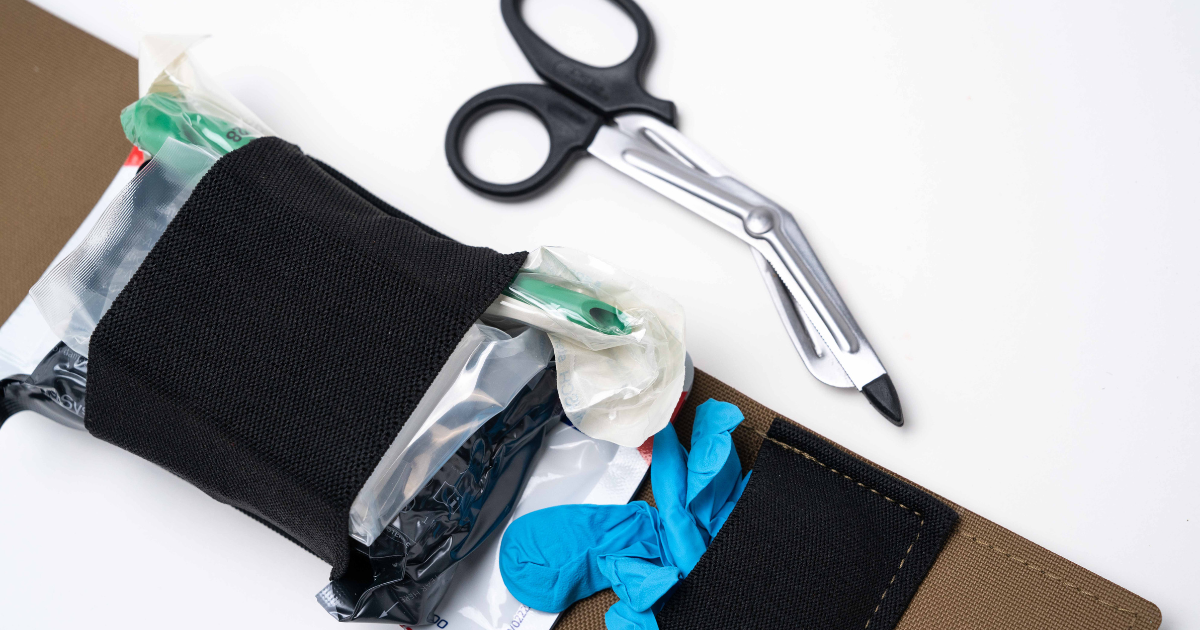
- Individual first aid kit (IFAK): A compact IFAK is a must-have for treating injuries. It should include bandages, gauze, adhesive tape, and antiseptics. Our PIMP Pouch is the perfect compact storage solution for your medical supplies. Pair it with the Trauma Kit Refill for all the essentials you need to handle emergencies.
Medical & Trauma Preparedness
Preparing for a medical emergency while hunting means more than just having the right supplies on hand. It also means knowing how to prevent minor injuries from escalating and even save lives in critical situations.
Hunting injuries include:
- Lacerations and punctures: These are caused by knives, arrows, or sharp objects in the terrain. They need immediate cleaning and dressing to prevent infection.
- Sprains, strains, or fractures: Uneven terrain and physical exertion can lead to twisted ankles, sprains, or fractures.
- Severe allergic reactions: Bee stings, insect bites, or food allergies can trigger severe allergic reactions, including anaphylaxis.
- Hypothermia or shock: Prolonged exposure to cold or extreme stress can lead to medical emergencies, so carrying the right supplies is vital.
- Dehydration or heat exhaustion: Long hours in hot or dry conditions can lead to dehydration or heat exhaustion, which, if untreated, may escalate to heat stroke.
How to Be Fully Prepared for Trauma Emergencies
- Take a first aid or trauma care course: Familiarize yourself with life-saving techniques like applying a tourniquet, managing bleeding, and recognizing the symptoms of shock or hypothermia.
- Pack a comprehensive trauma kit: Build or purchase a kit that includes tourniquets, bandages, gauze, antiseptic wipes, antibiotic ointment, and trauma shears.
- Keep your gear organized and accessible: Use a high-quality pouch like the PIMP Pouch to store and organize medical supplies. Position it on your belt or pack for easy access in high-pressure situations.
- Have a communication plan: Verify you can call for help in remote areas by carrying a satellite messenger or two-way radio. Before heading out, let someone know your location and hunting plans.
By understanding how to handle these situations, you’ll respond swiftly and effectively when accidents occur.
Emergency Survival Essentials
In the wilderness, preparation is everything. A well-stocked emergency survival kit means the difference between safety and danger during unexpected situations. Here’s what you need to stay prepared and protected in the outdoors.
Core Emergency Items
- Multi-tool or knife: A multi-tool or sturdy hunting knife is invaluable for cutting, repairing gear, or preparing food.
- Fire-starting tools: Carry a lighter, waterproof matches, or a magnesium fire starter to build a fire even in adverse conditions.
- Shelter items: Compact options like tarps or emergency tents protect from the elements when the weather turns bad.
Water and Food Supplies
- Water filtration system: Portable water filters or purification tablets give you access to safe drinking water, even if your primary supply runs out.
- Portable food: High-calorie emergency rations, energy bars, or freeze-dried meals provide sustenance without taking up much space.
Our Dump Pouches are ideal for carrying these supplies, keeping them accessible while maintaining an organized pack. Read Dump Pouches for Hunting to learn more.
Emergency Signaling Tools
- Flashlights and headlamps: LED flashlights and headlamps provide reliable light sources. Opt for rechargeable models or carry extra batteries.
- Signal mirrors: These compact tools are highly effective in catching the attention of rescuers during daylight hours.
Read How to Organize Hunting Gear for Your Next Hunt to learn how to best set up your hunting pack with all your safety and emergency hunting items.
Do you have to take a hunter safety course?
Yes, in most cases, you are required to take a hunter safety course if you want to purchase a hunting license. However, the requirements do vary by state.
The course typically covers topics like firearm safety, hunting ethics, wildlife conservation, and survival skills. Some states offer online courses, while others may require in-person classes or a combination of both.
If you’re unsure about the requirements in your area, check with your state’s wildlife agency for specific guidelines.
Stay Safe and Hunt Smart with the Right Gear
Preparation is the foundation of every successful hunt. Equipping yourself with reliable safety gear, emergency supplies, and essential tools not only protects you but also makes sure you’re ready to tackle any challenges the outdoors presents.


Leave a Reply
Want to join the discussion?Feel free to contribute!